Summerlin
A masterplan exploration tool for Summerlin, a large-scale real estate development in Nevada.
- Client
- Howard Hughes
- Location
- Las Vegas, NV
- Year
- 2026
- Stack
- Unreal Engine, C++, Blueprint, HLSL
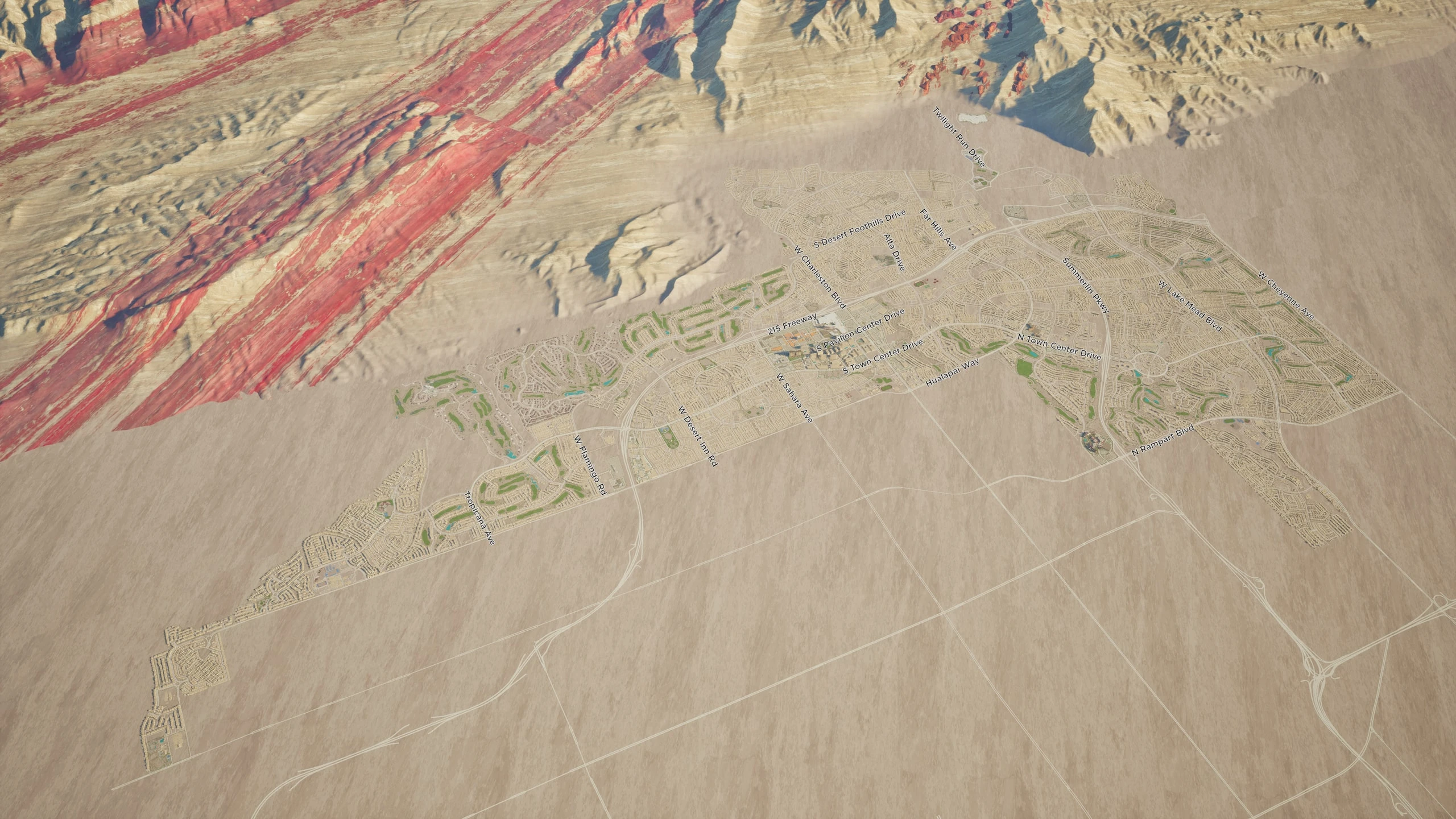
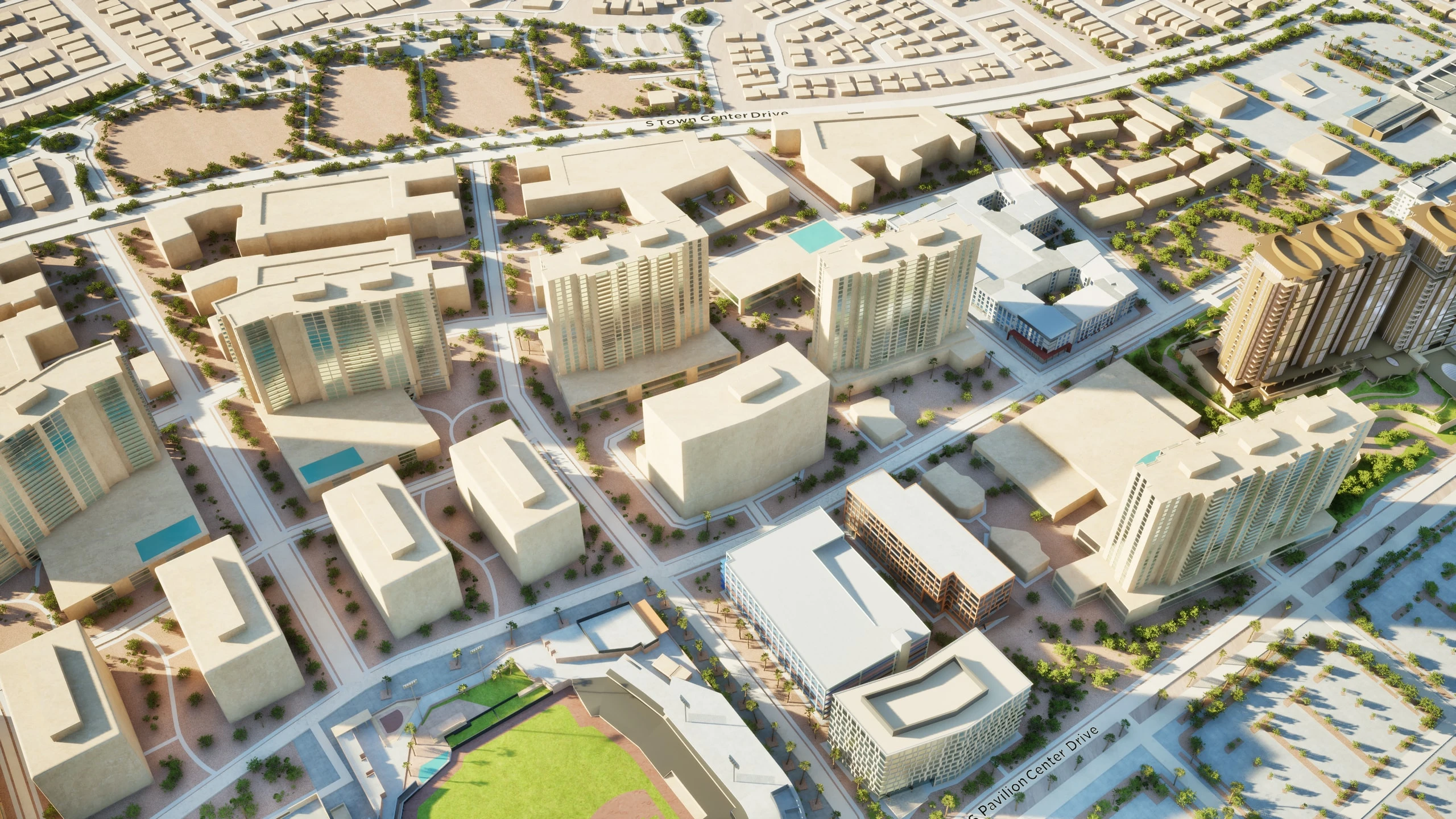
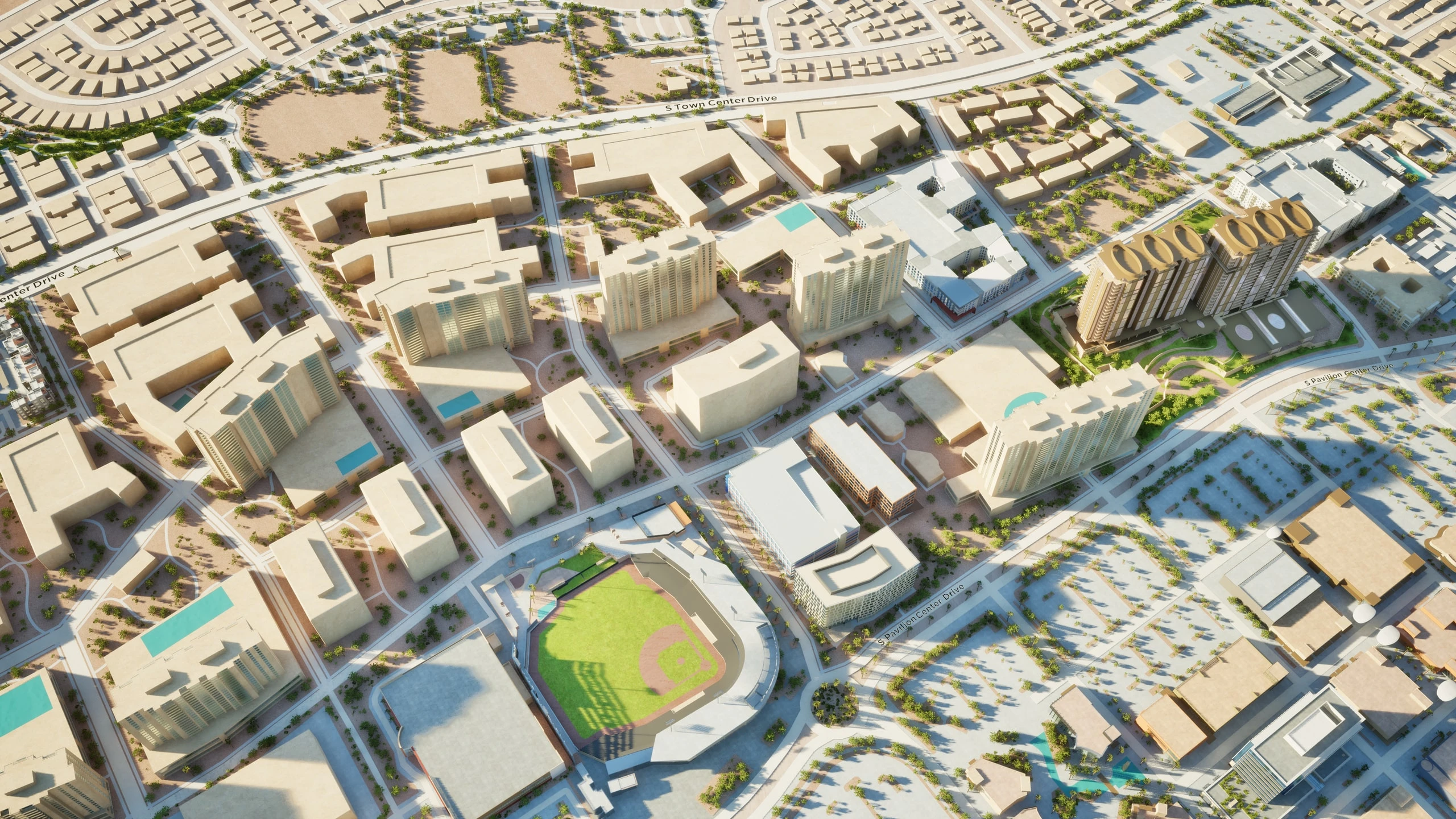
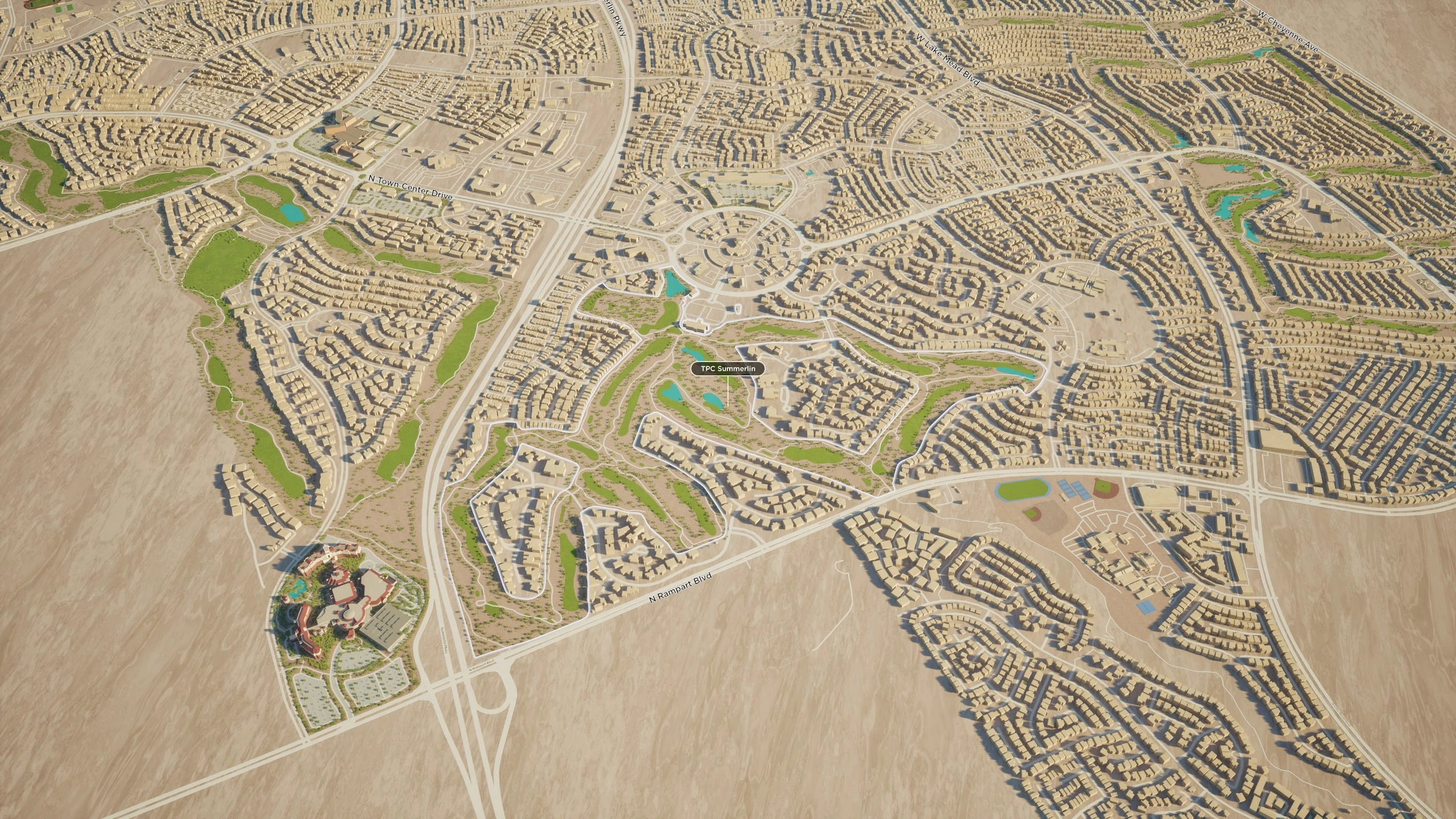
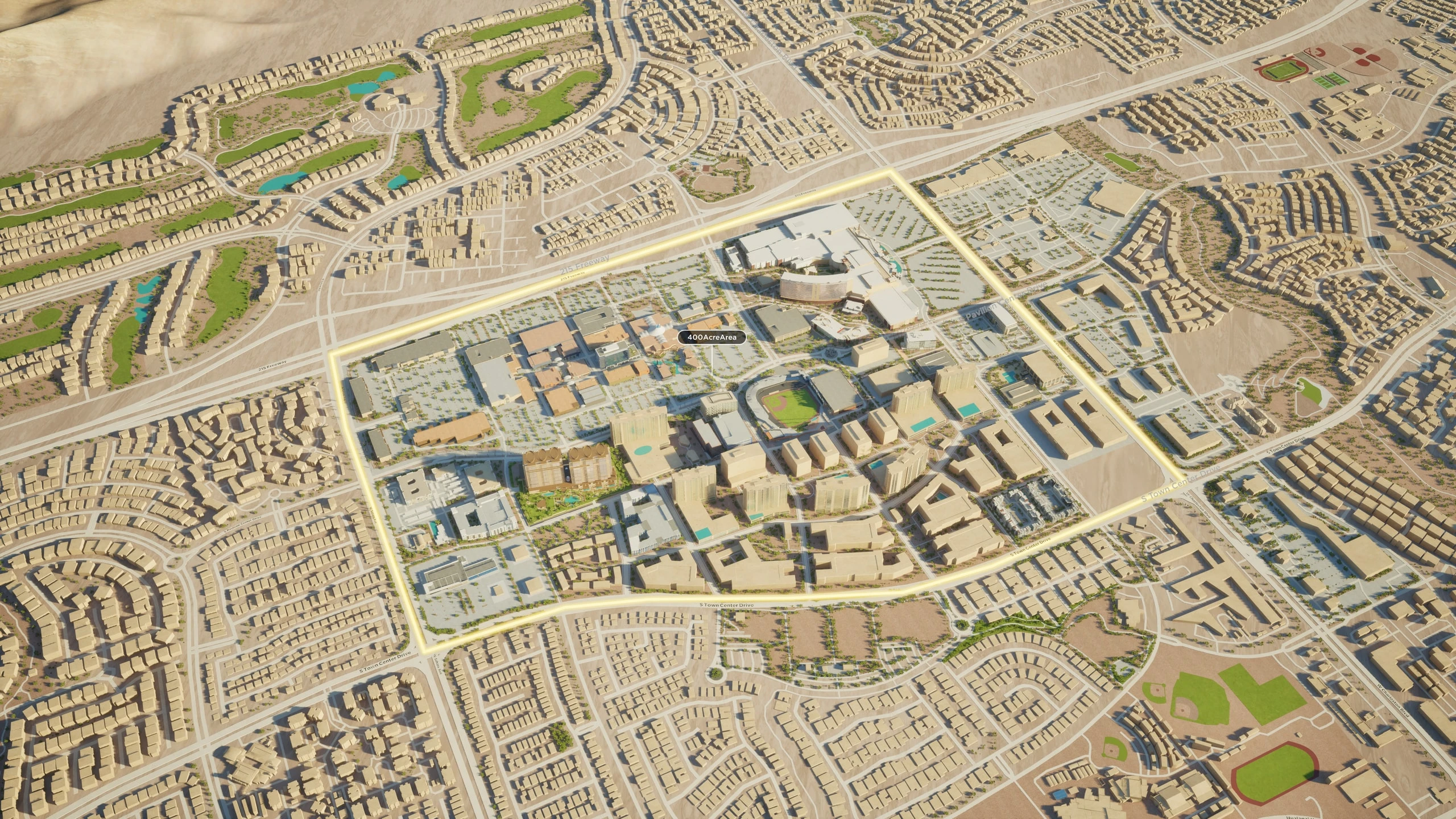
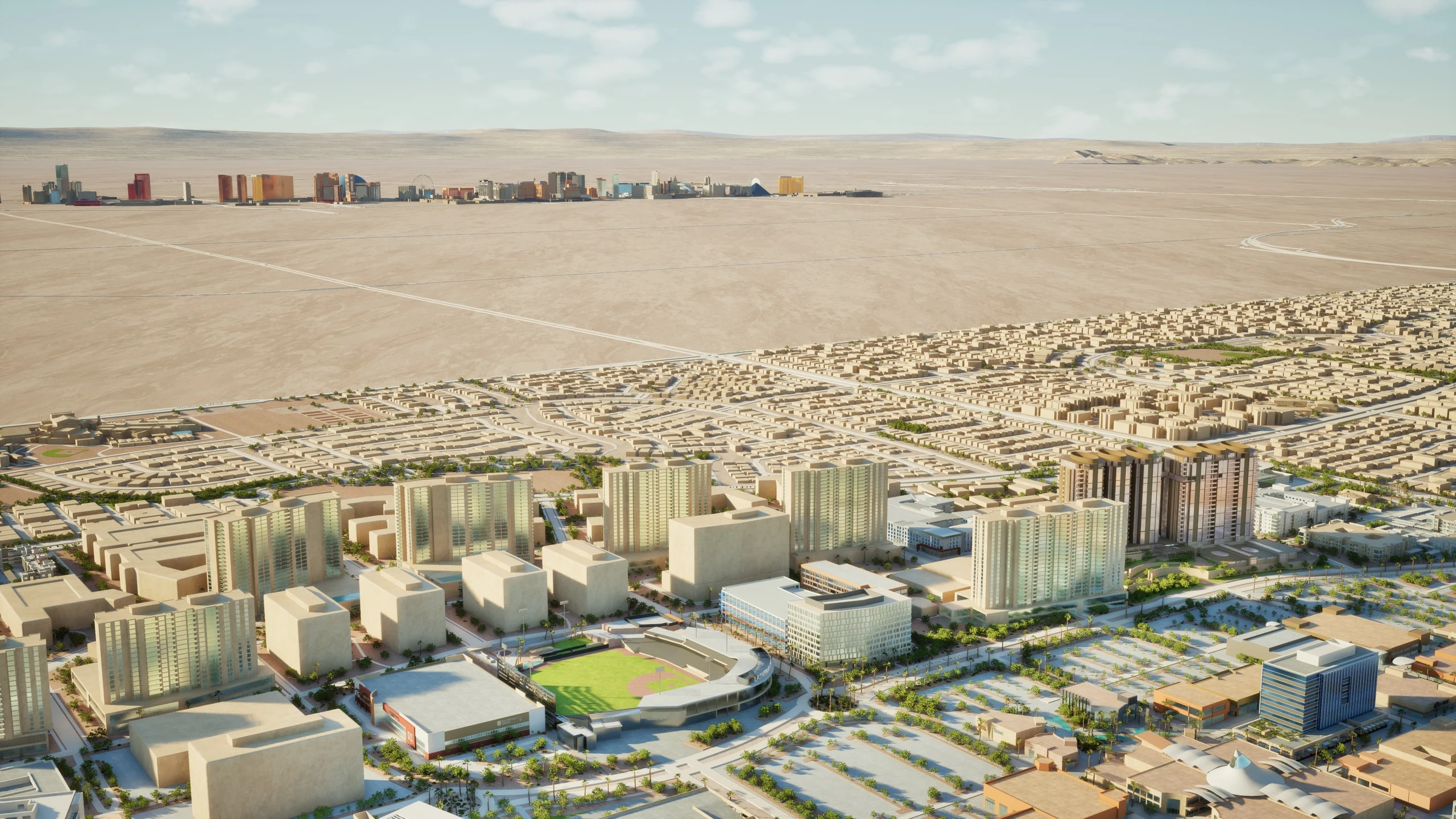
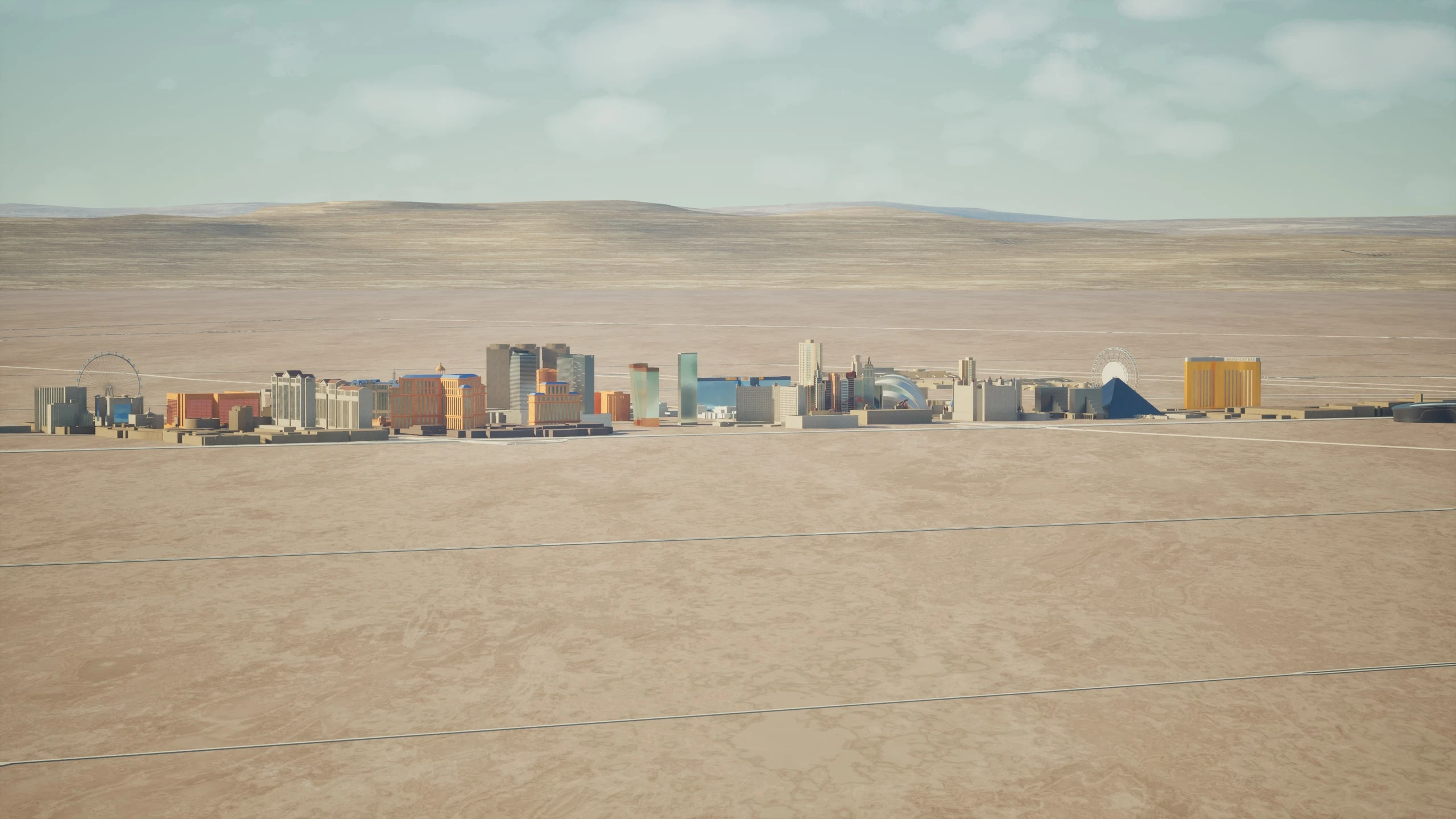
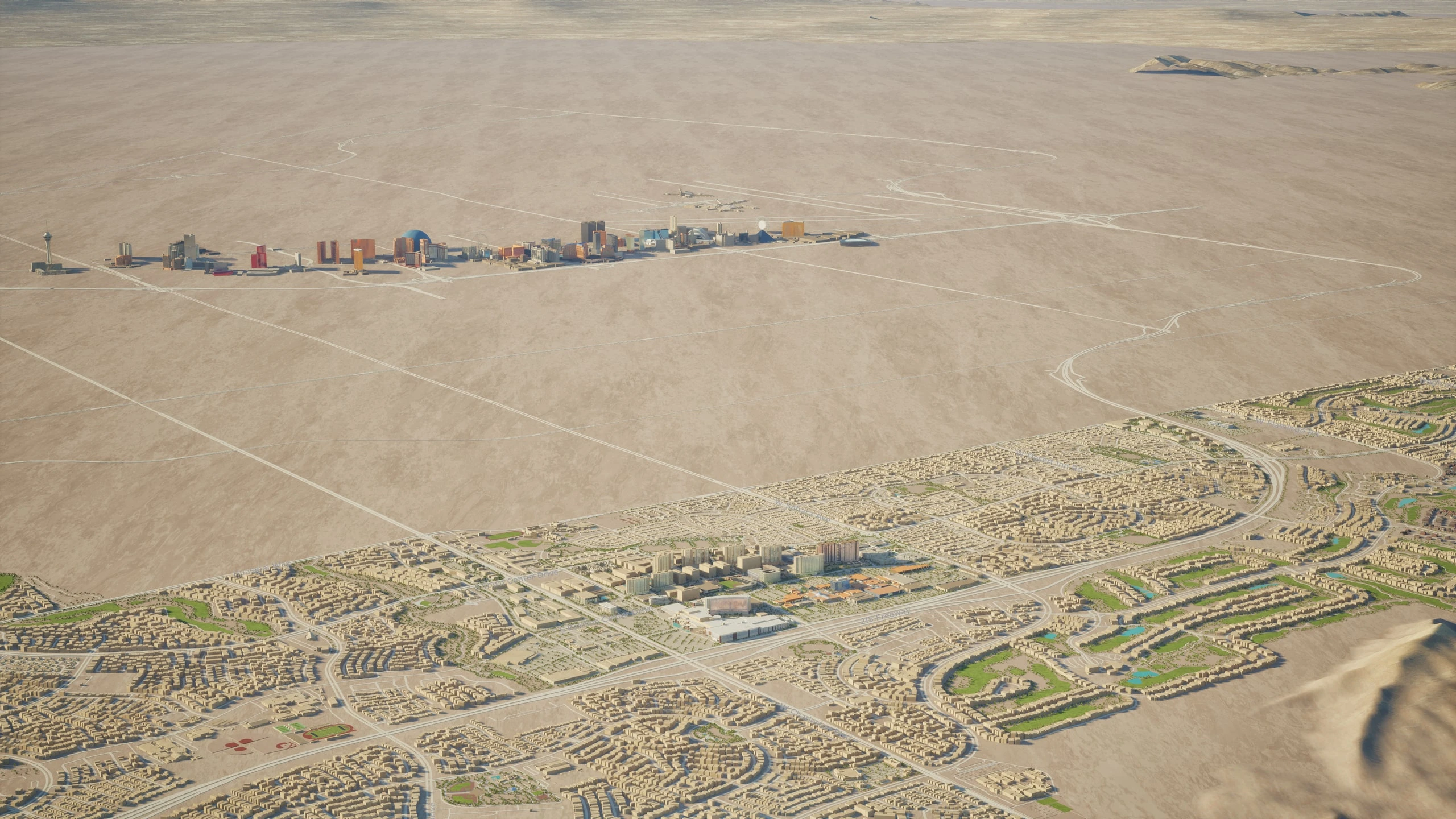
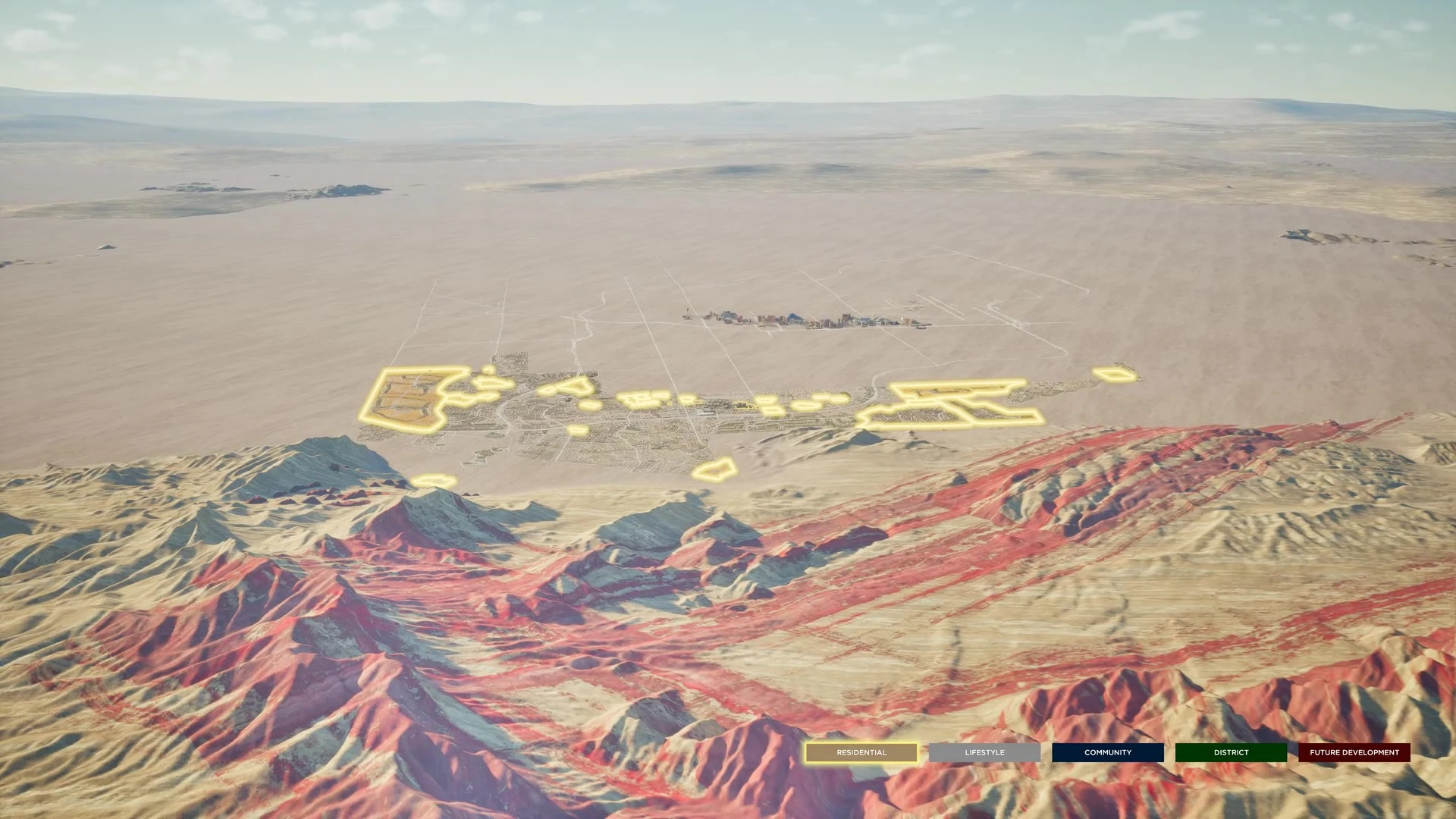
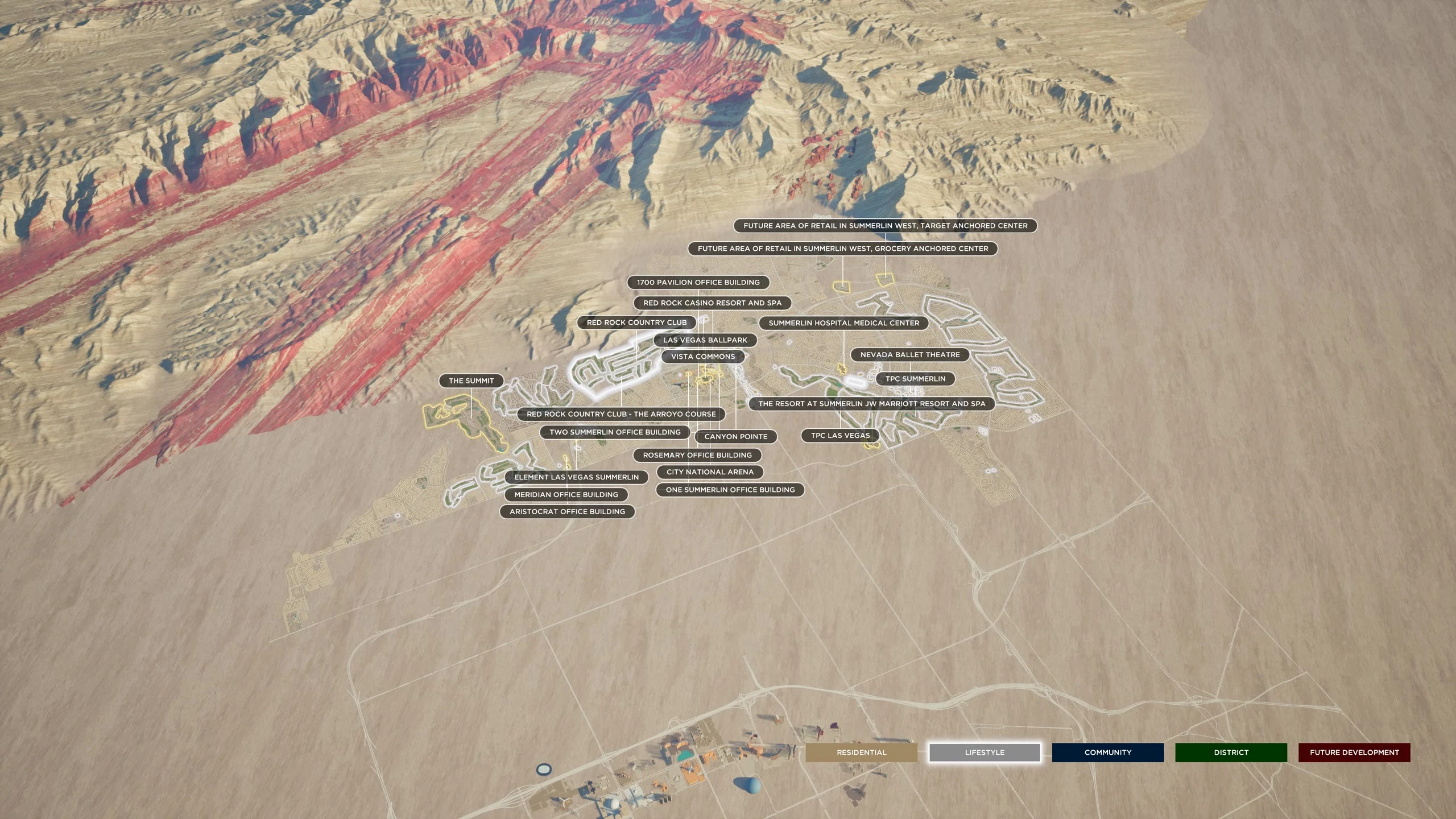
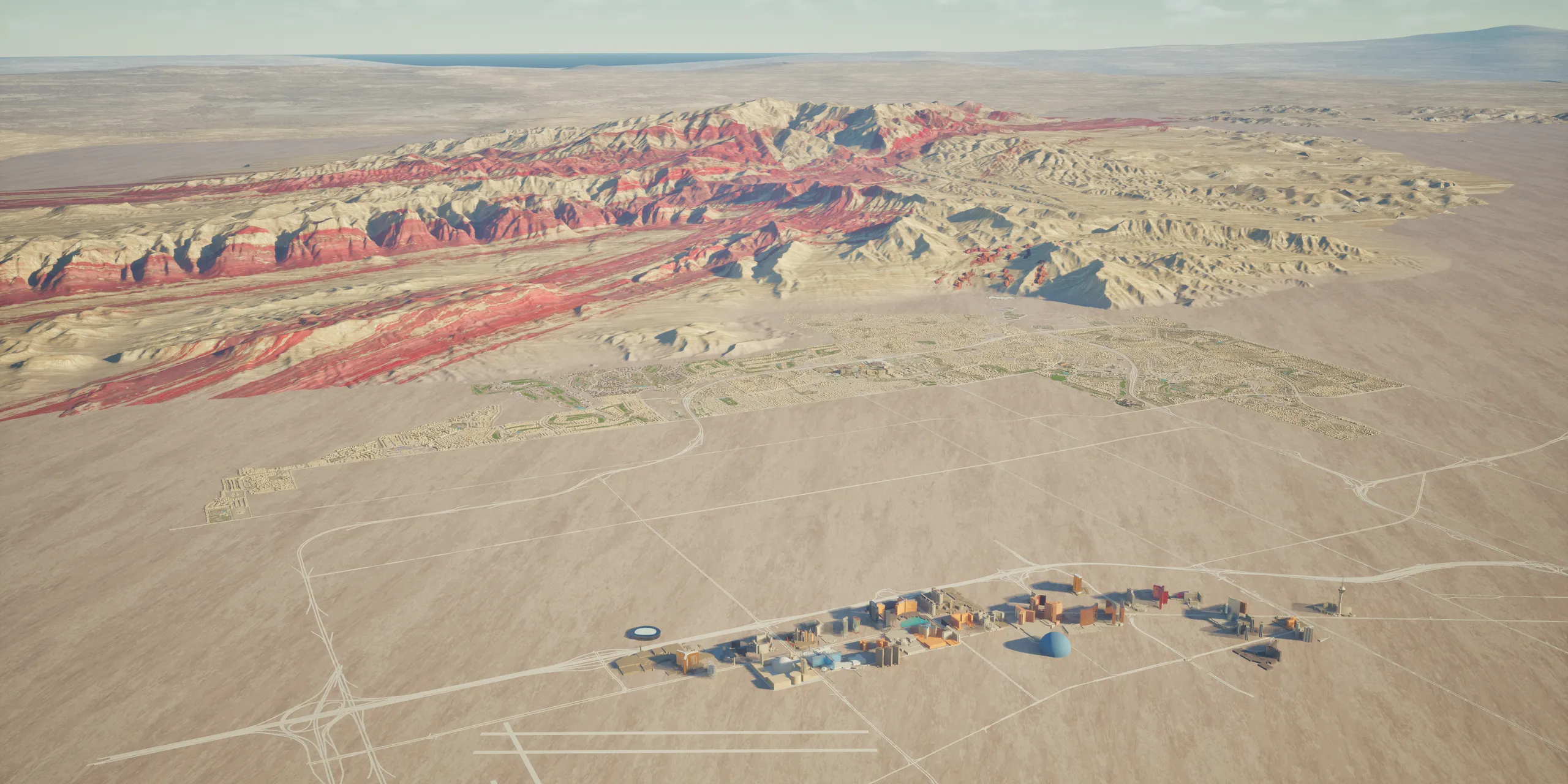
Summerlin is Howard Hughes’ master-planned community in Las Vegas. For its sales gallery, AV&C built a digital twin of the whole community that sales agents drive from an iPad. Two 98-inch 4K displays, one in the lounge and one in the meeting room, are rendered from a single workstation in the rack. Agents fly between some 190 points of interest across five categories, frame any of them, and split the view into up to four panes.
The architectural model comes from Binyan. Colin Hoy and I built the Unreal side; it was installed in June 2026 and has been extended through change orders since.
Systems
- Street label system
- Stencil-based highlight backend
- Model integration and performance tuning
- Camera clearance and test tooling, with Colin
- Tiled hero capture through the Optic renderer
Street labels
Road names have to stay legible from any heading. I designed and built the label system: names follow the road splines and repeat along them, and each repeated block mirrors its word order about its own midpoint, so a name still reads correctly after the camera orbits past it instead of turning upside down. Labels are exported to JSON so they survive every model re-import, and the subsystem updates at 20 Hz, only when the camera has moved. Colin added the overview tier that keeps names readable from the farthest view.
Highlights
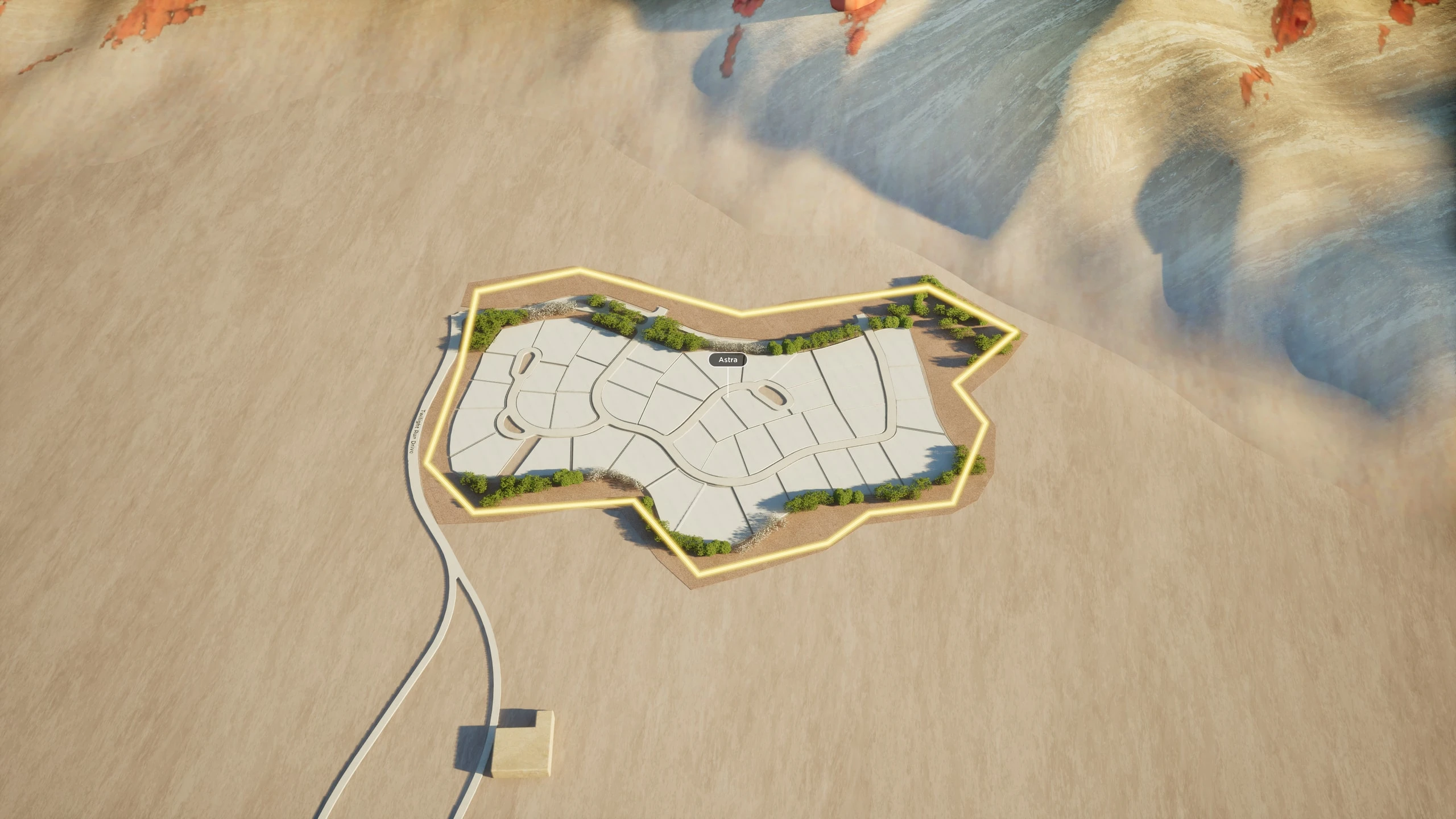
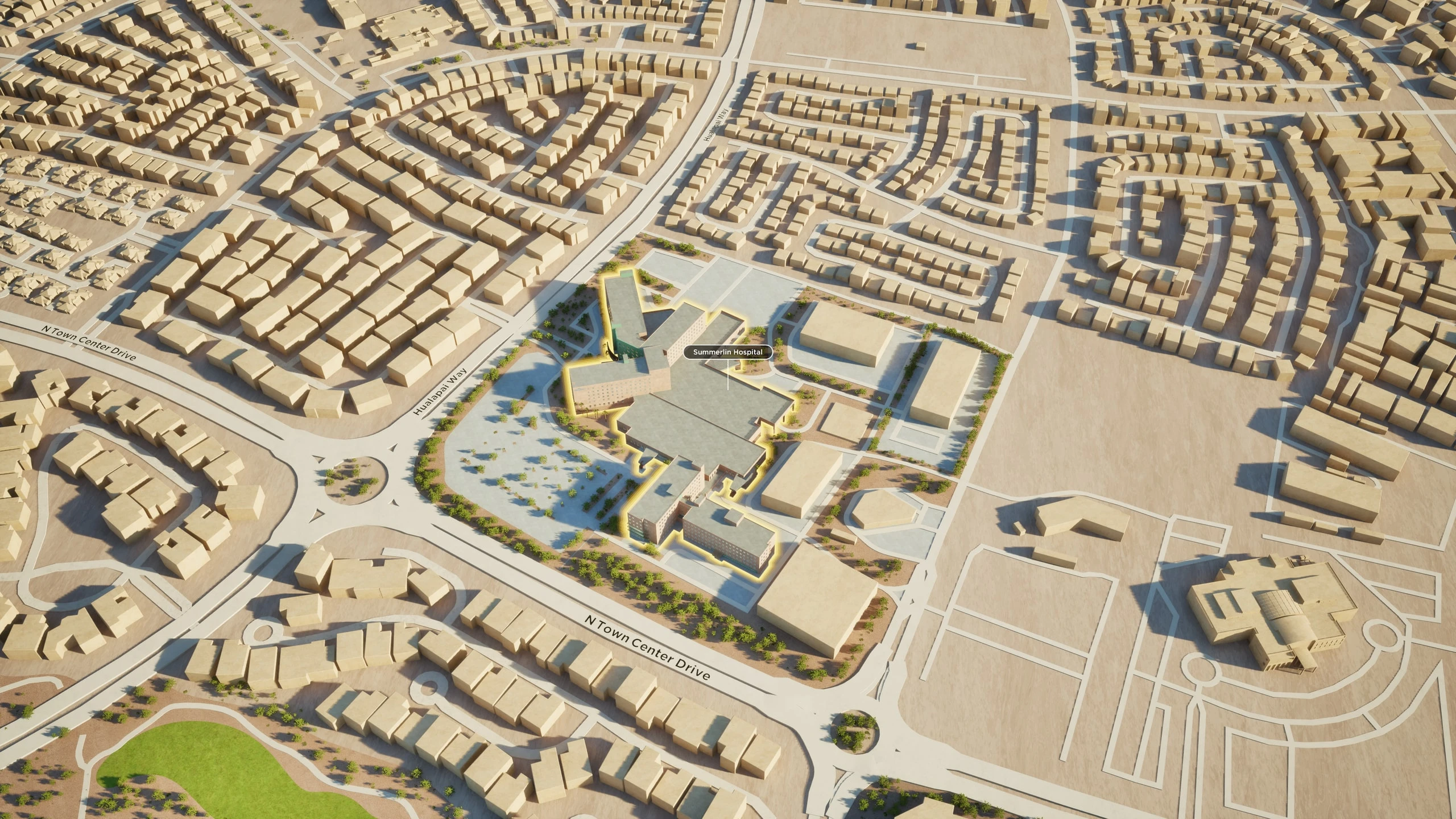
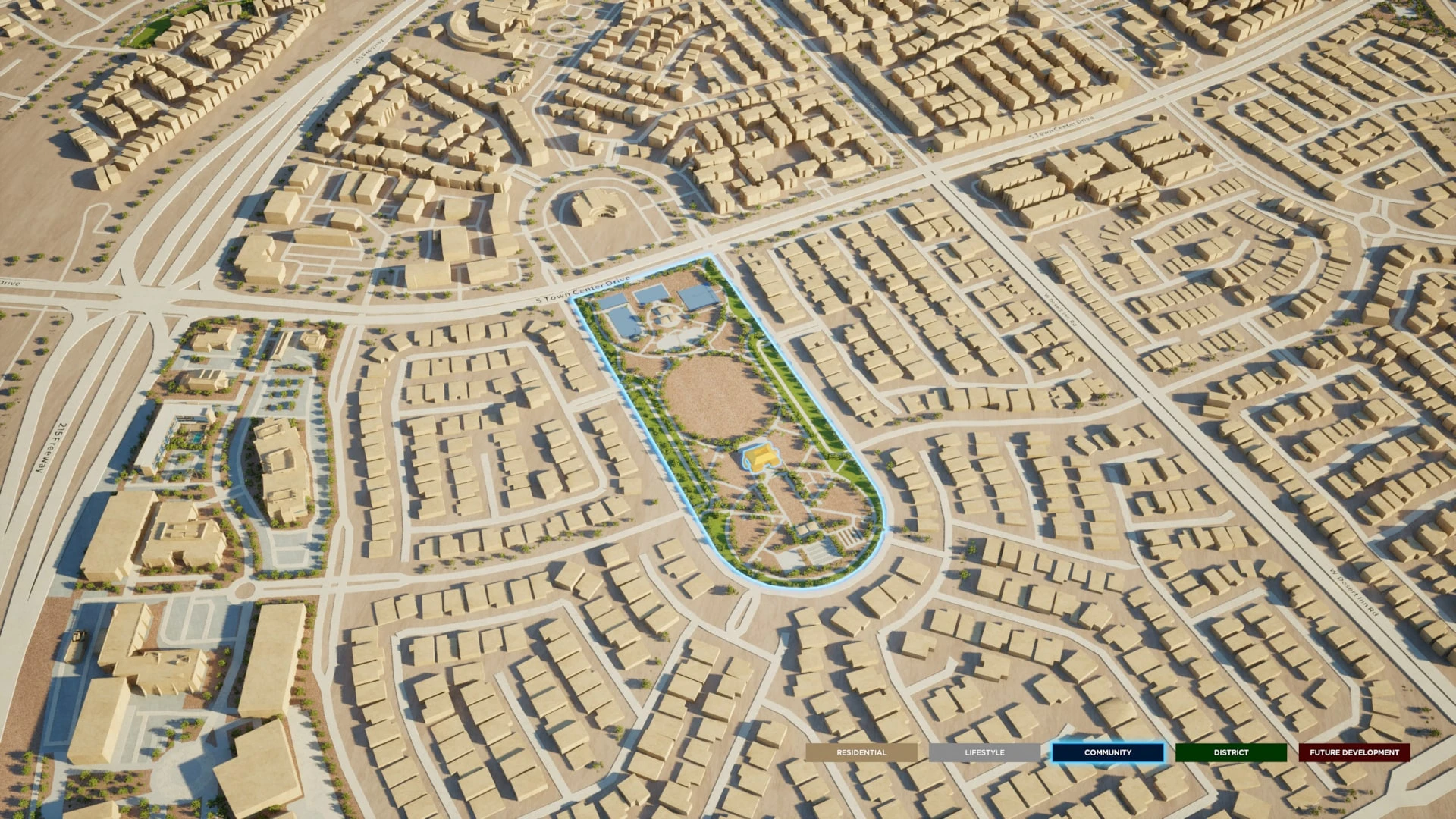
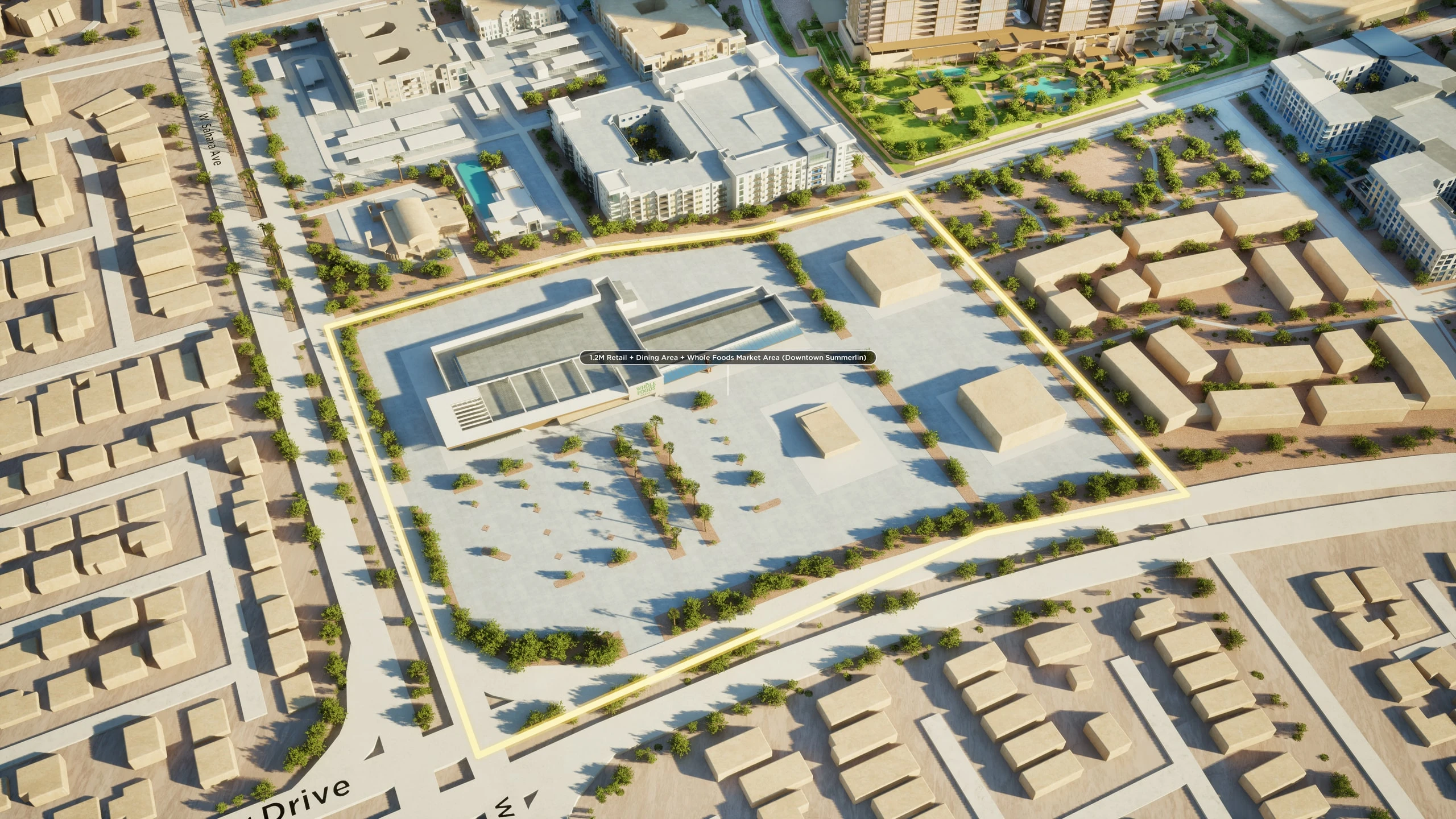
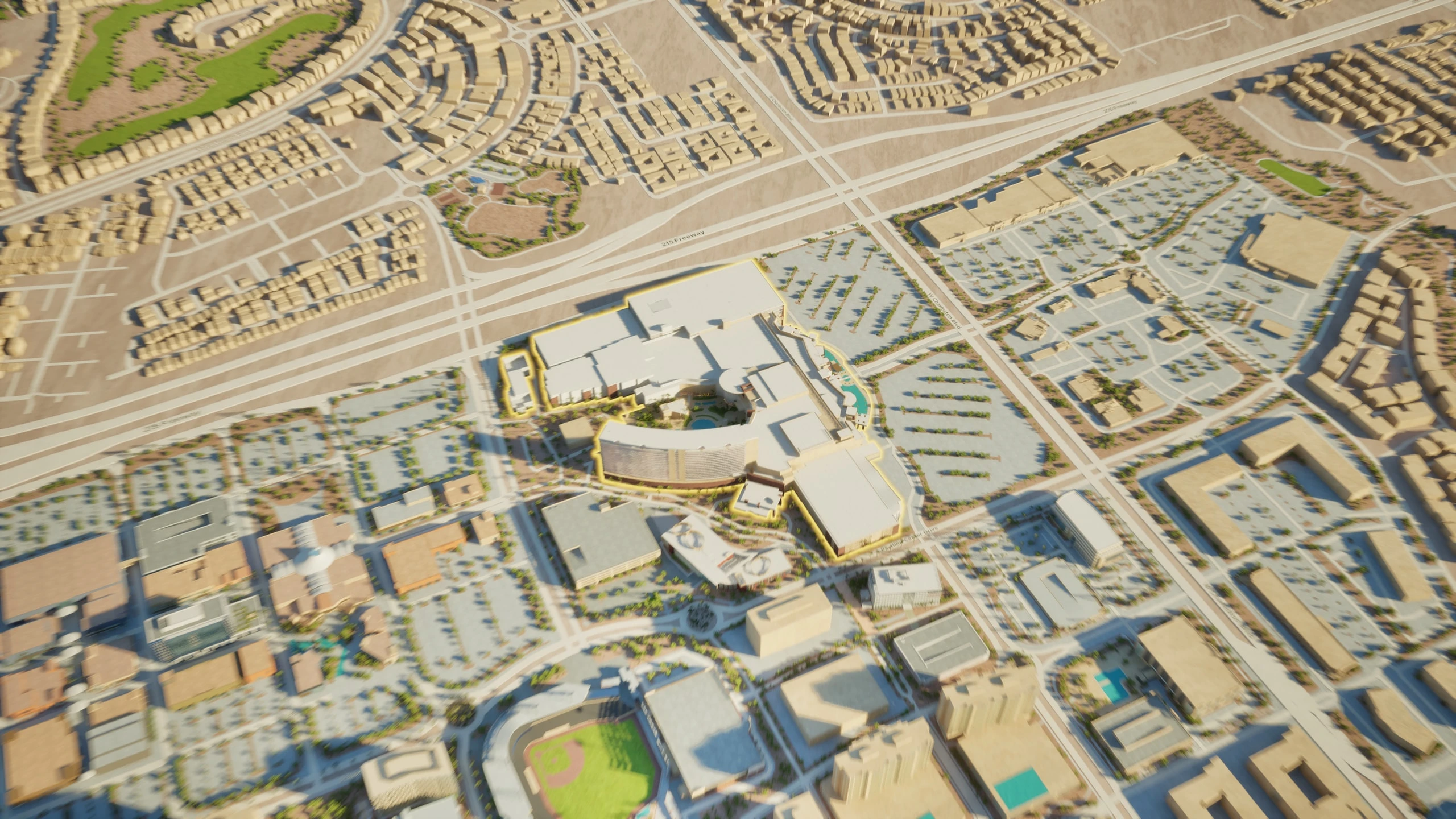
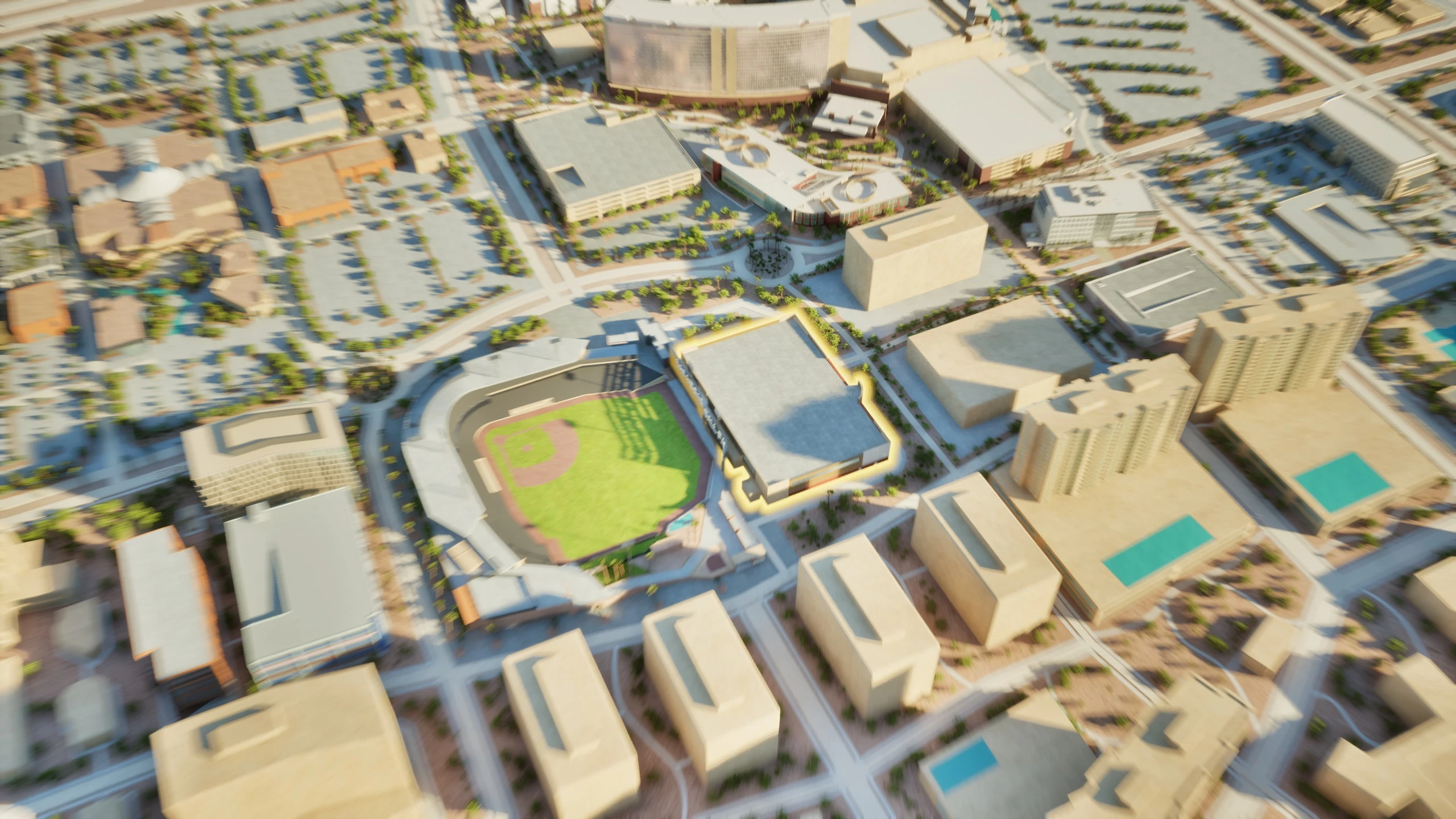
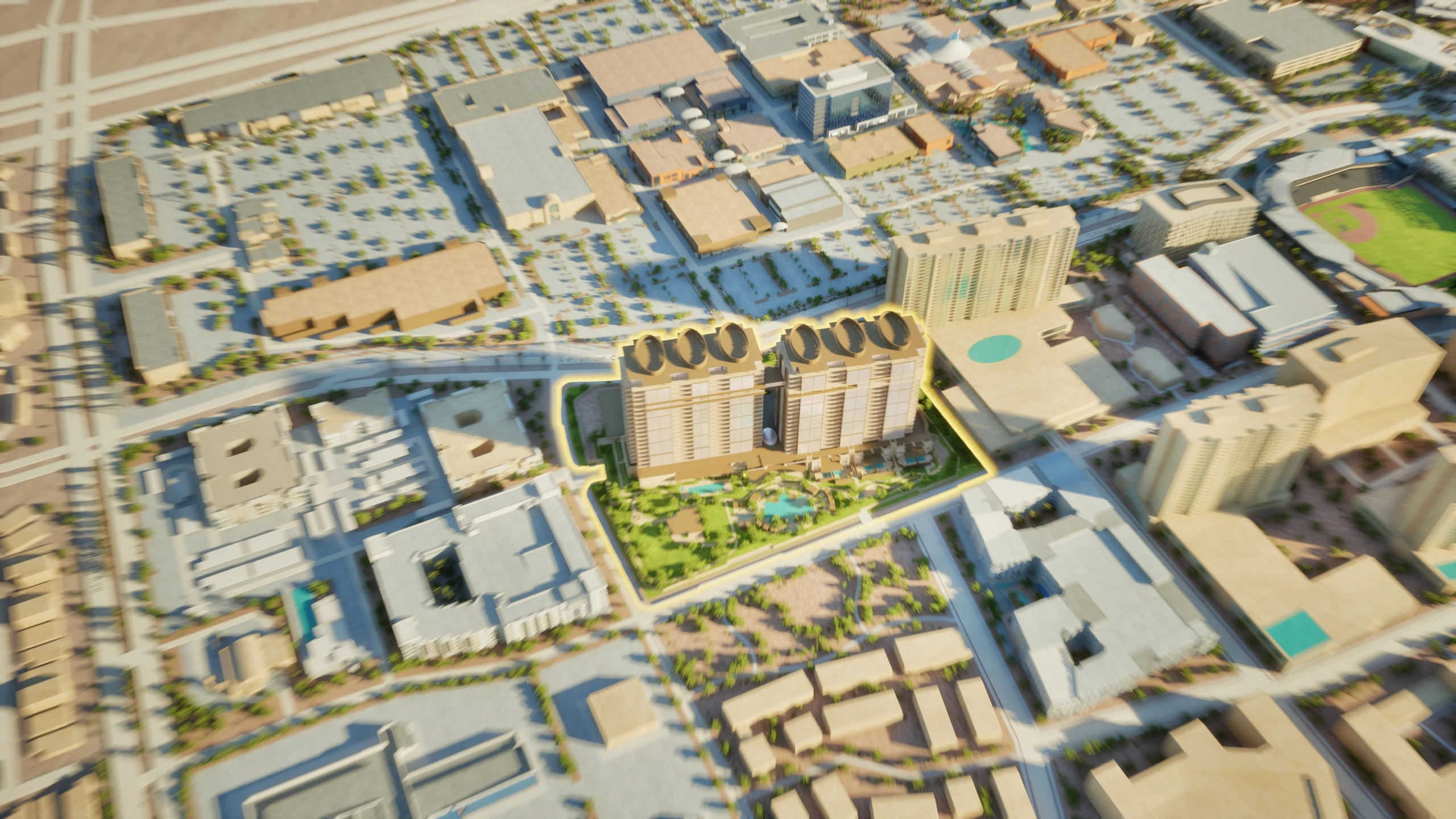
Selecting a place lights its buildings or parcel in its category color. I built the stencil-based highlight backend, which packs each highlight’s color ID and fade level into the stencil byte, sixteen of each. It replaced per-place post-process passes whose cost multiplied with every highlighted place across four panes. Thin outlines widen with distance so they hold as lines at the overview instead of breaking into dots.
Model and performance
I brought every model revision from v11 to v43 into the scene, moved the 180-odd points of interest onto a new component, and tuned Nanite, virtual shadow maps and foliage for the target hardware. Turning off ray tracing alone cut frame time by 67%.
Camera
The camera system was built with Colin, whose work is the orbit camera and the arc paths between points of interest. I added clearance over buildings — 559 building meshes are tagged so the orbit lifts over them rather than cutting through — kept the zoom when returning to the hero view, and built an on-screen camera panel that stands in for the iPad when testing packaged builds.
Hero image
Tablets that cannot run the 3D scene get one enormous still instead. I built its tiled capture on Optic, the team’s in-house renderer, extending it with sub-frustum rendering that matches the engine’s own projection exactly. A 200,000-pixel-wide image of the masterplan renders as 1,372 tiles in about an hour and becomes a 2.2 GB zoomable image.